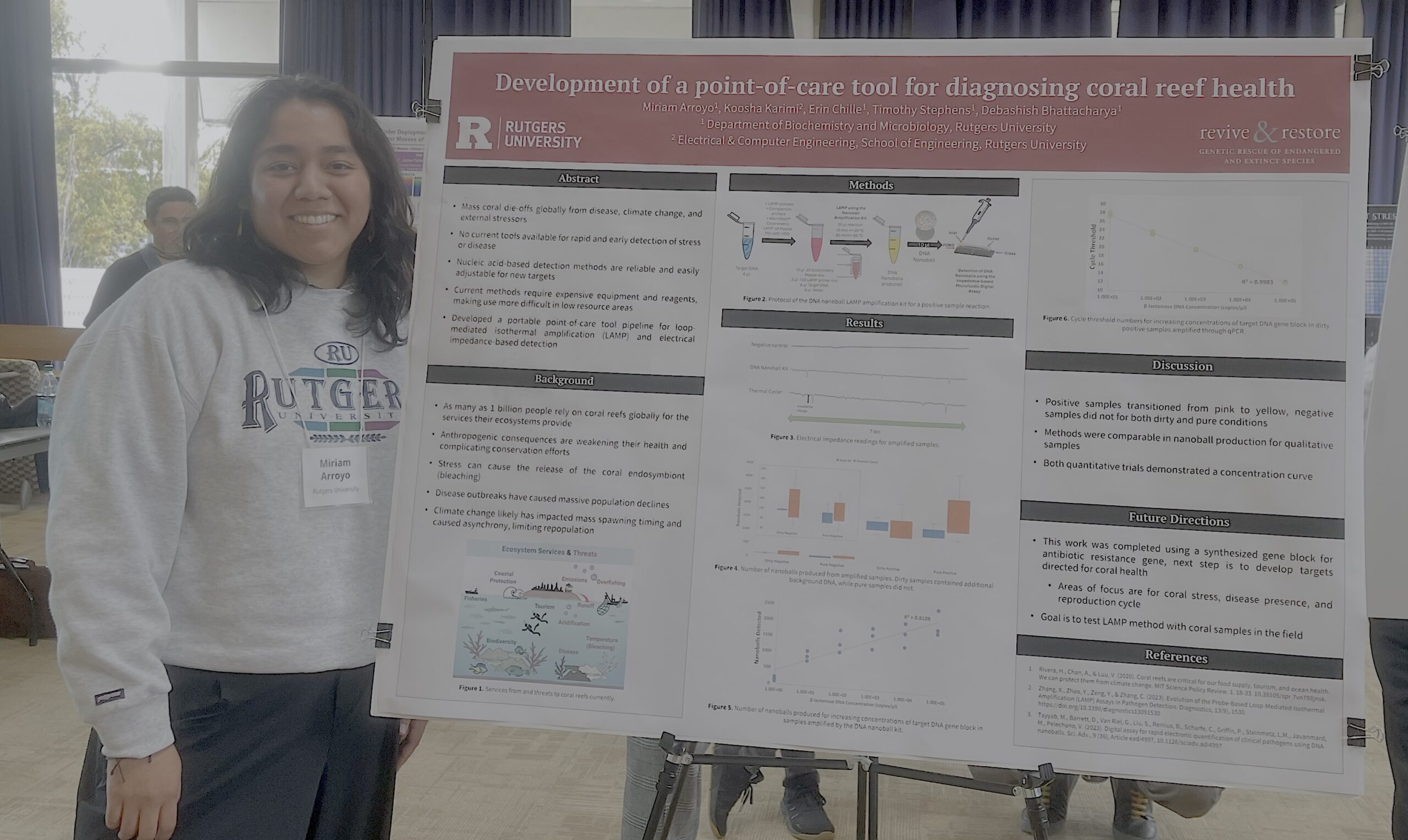
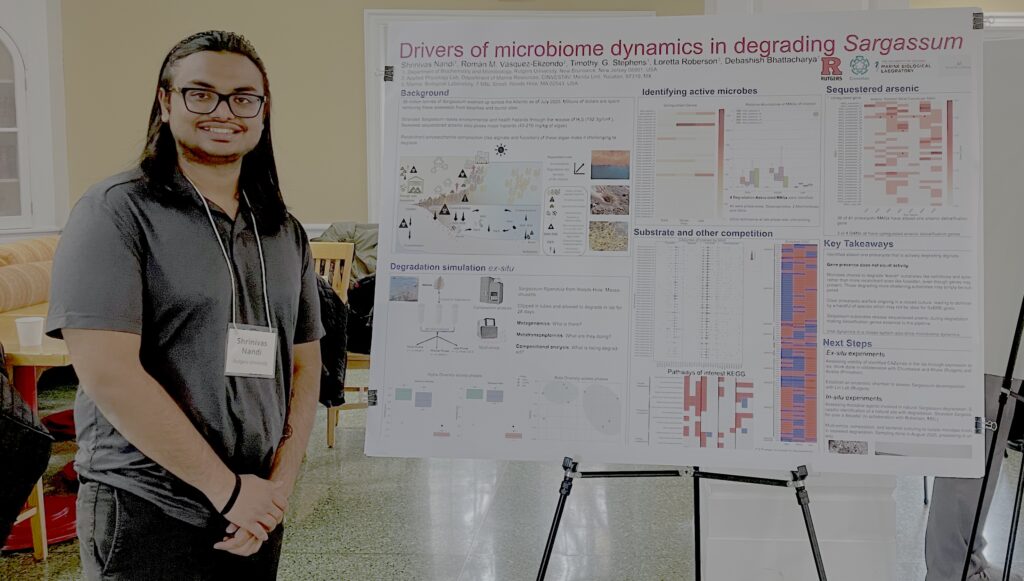
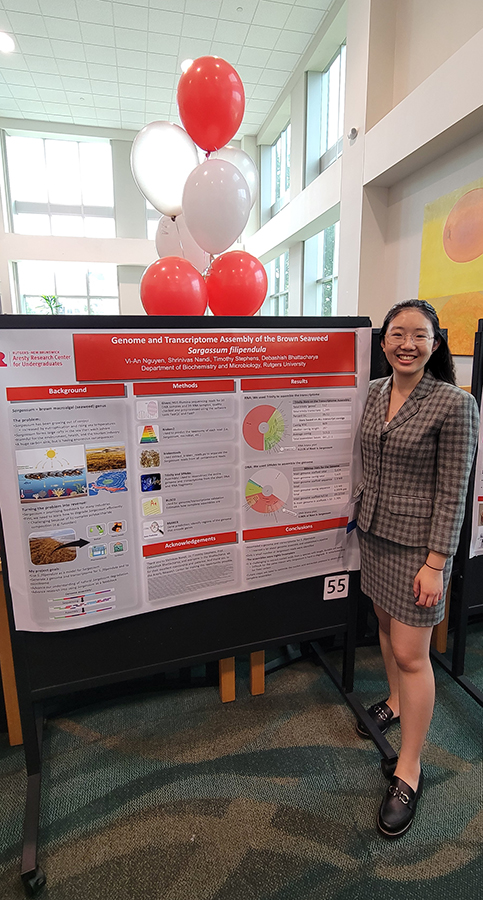
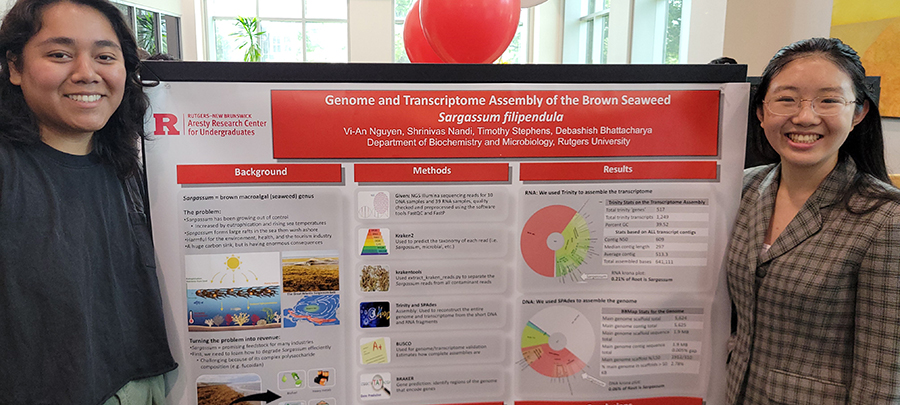
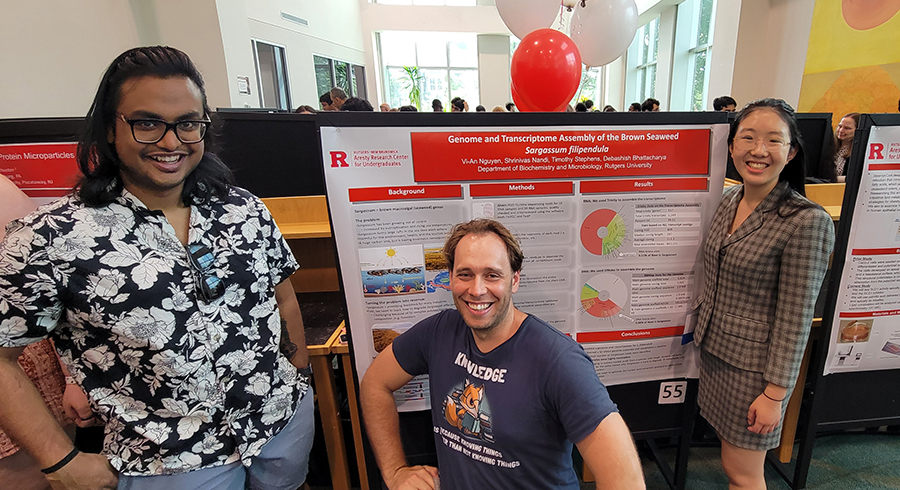
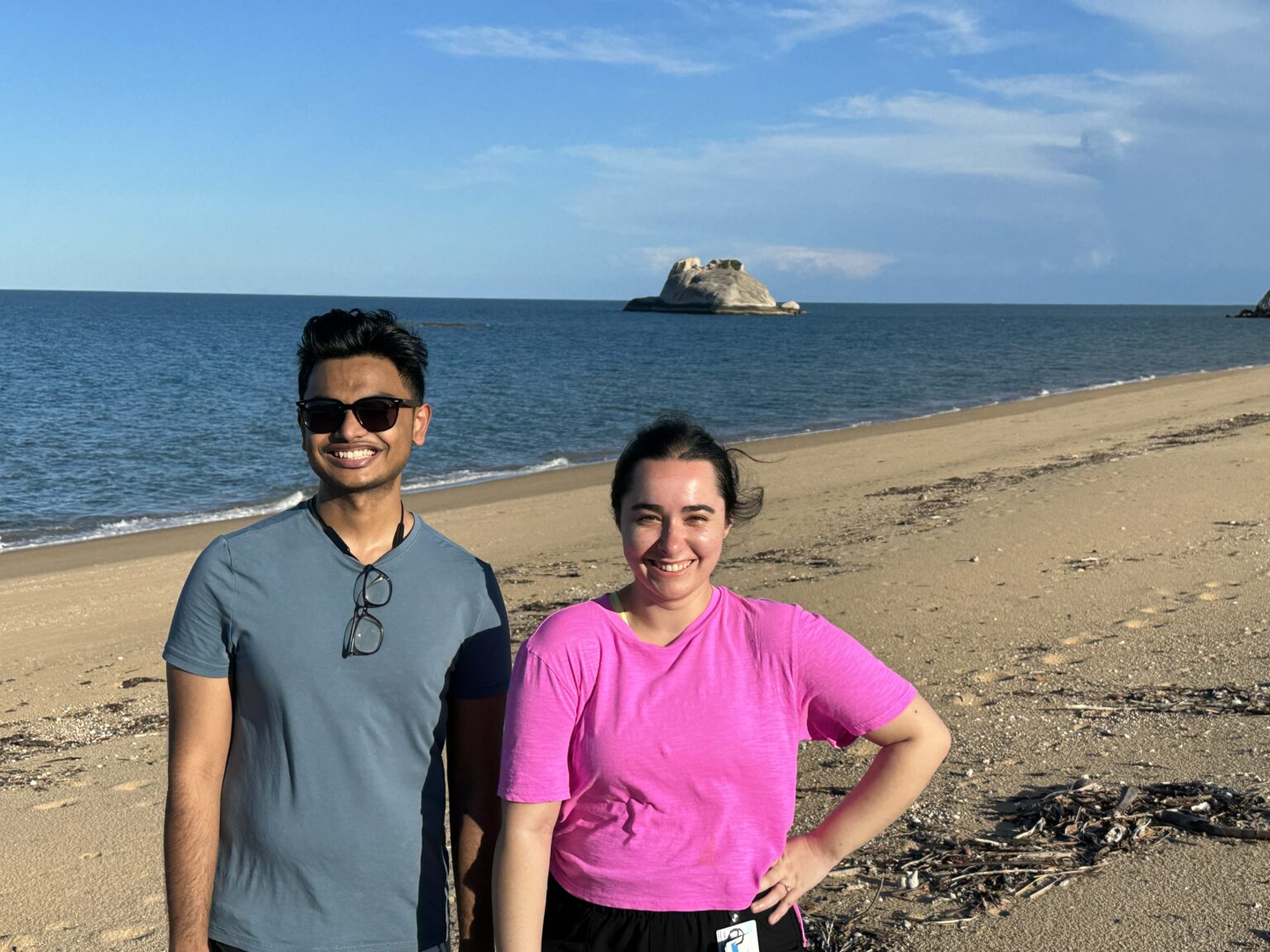
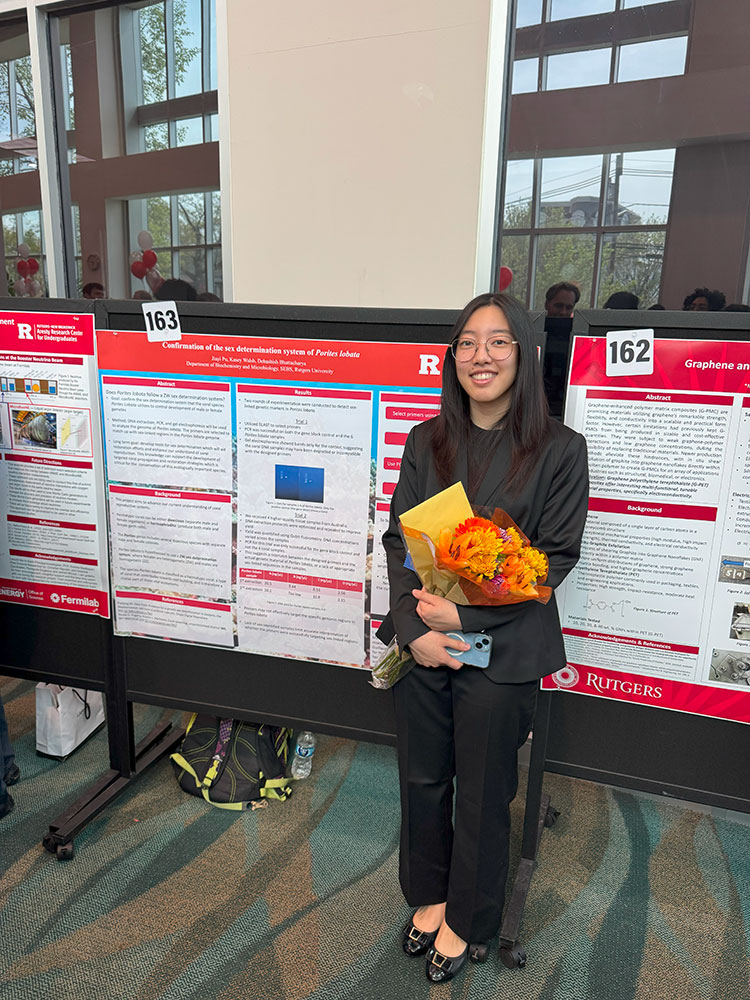
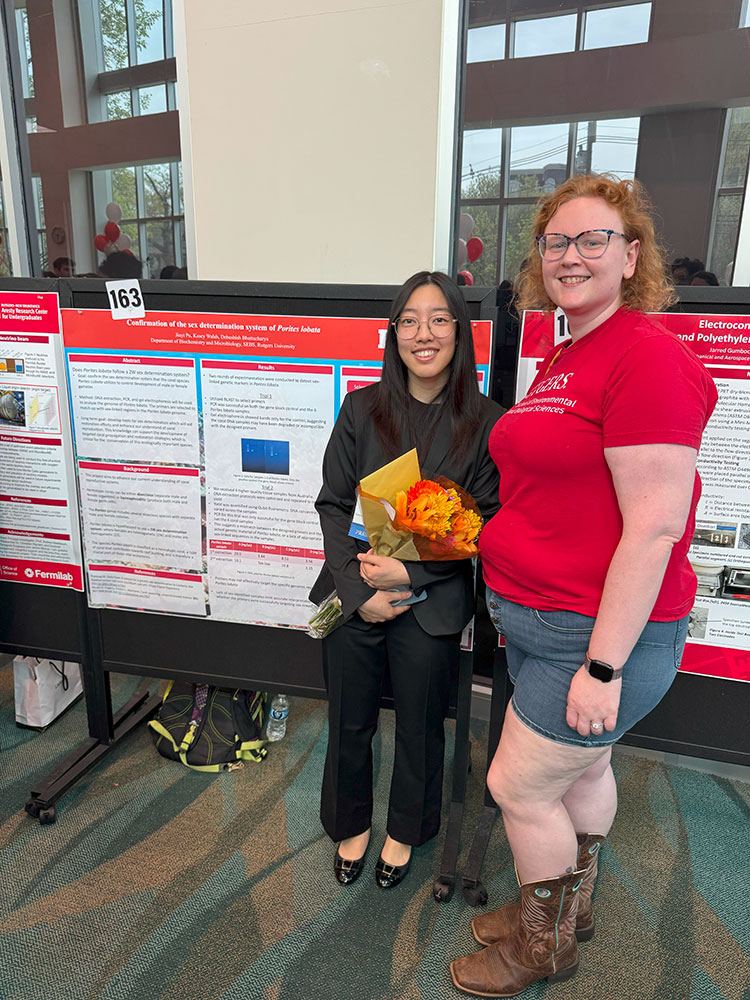
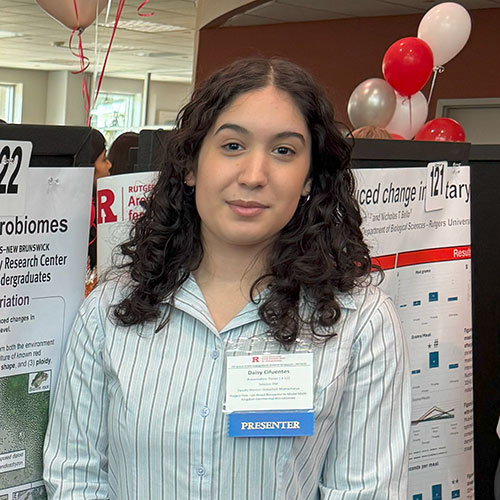
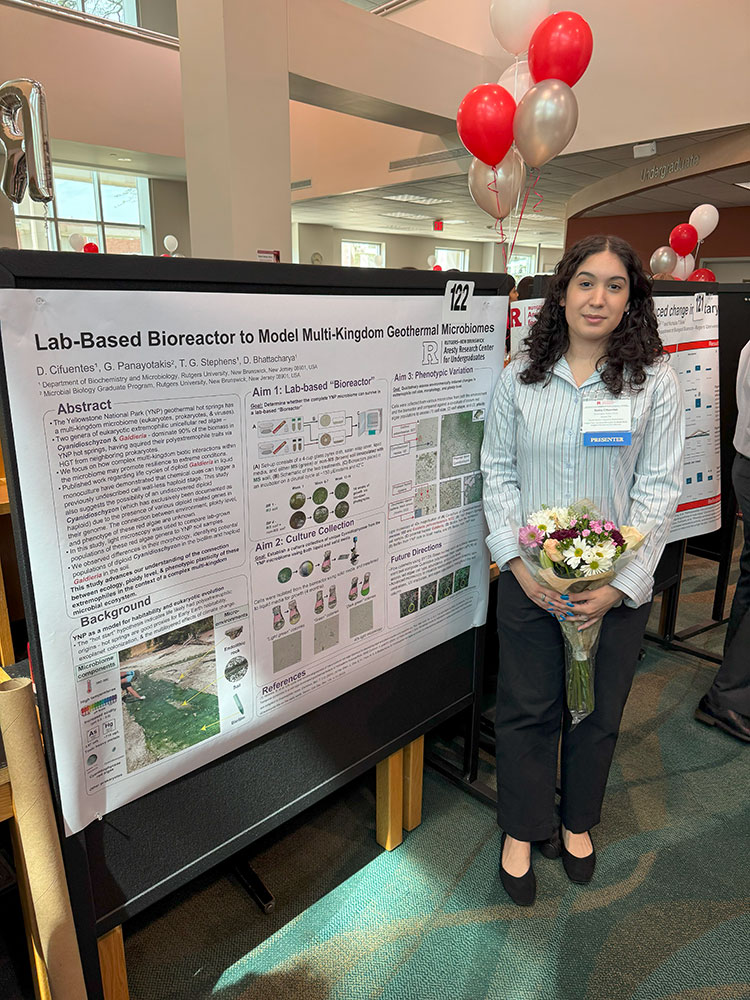
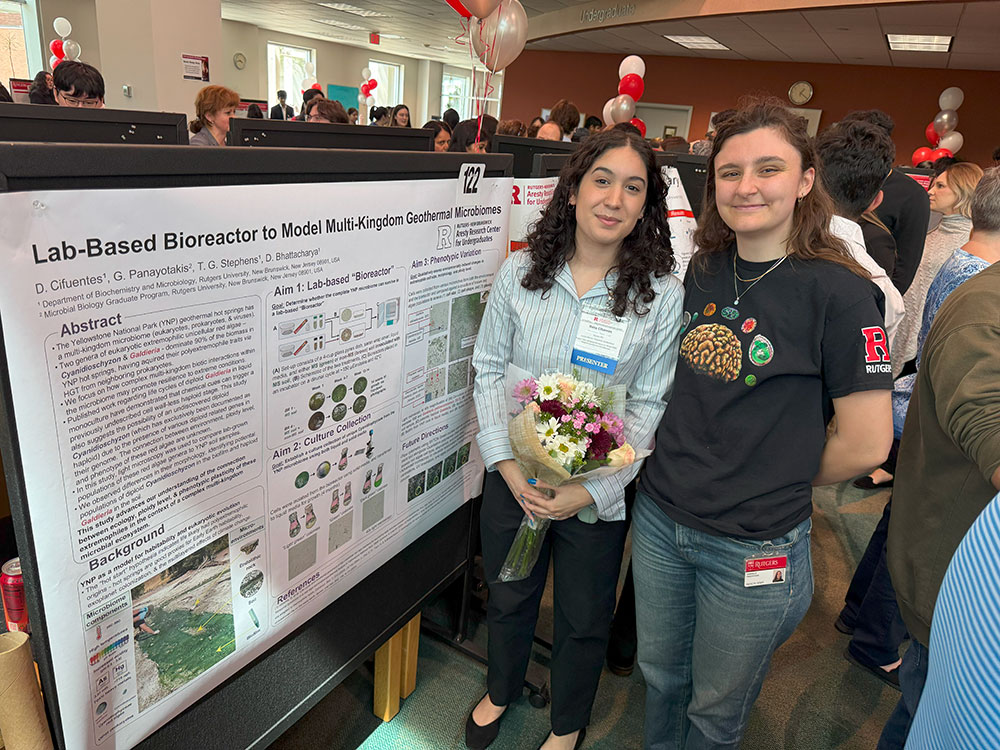
Graduate students Shrinivas Nandi and Miriam Arroyo present their posters at the Rutgers Climate Symposium 2025, named the “The Blue Planet”, sponsored by the Rutgers Climate and Energy Institute.
Shrinivas is studying the microbiome of Sargassum to develop tools for degrading this seaweed into useful products.
Miriam is designing a genetic toolkit for monitoring the health of corals to aid reef conservation.
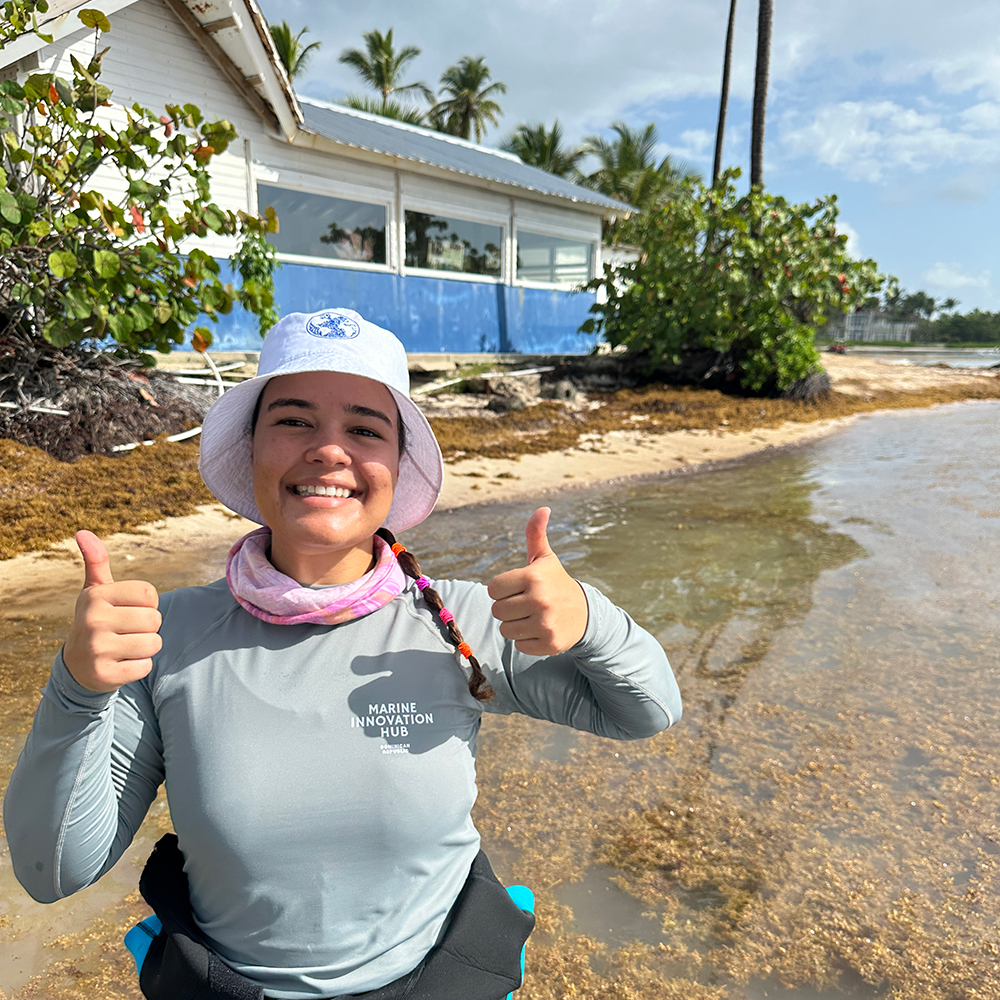
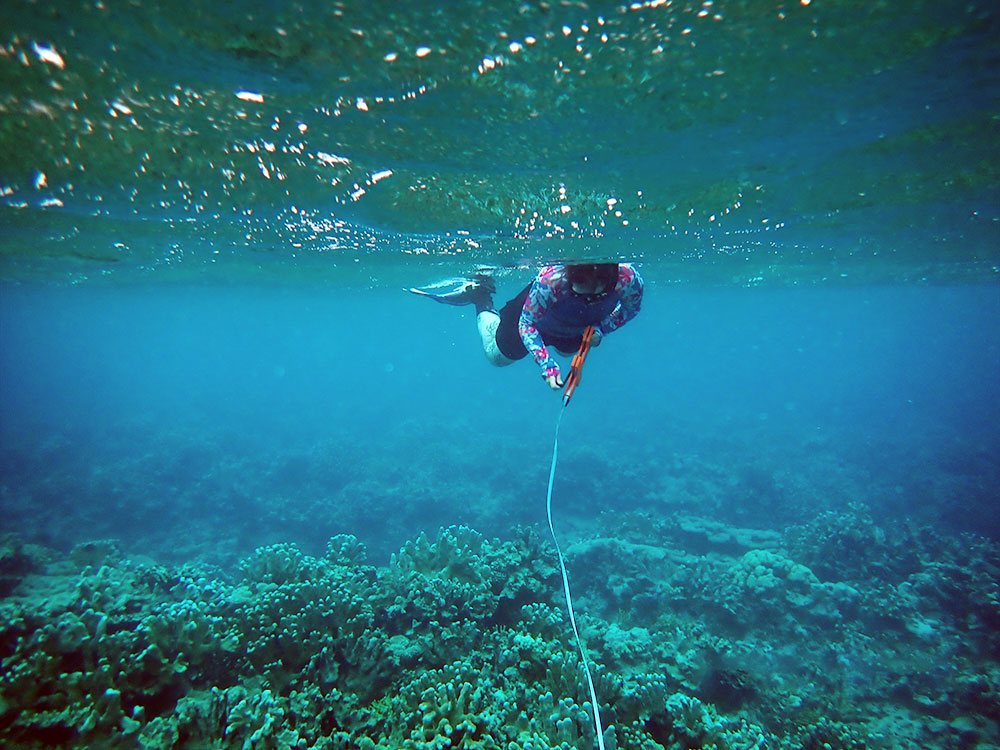
The Bhattacharya lab is visiting the most eastern part of the Dominican Republic in the Caribbean – Punta Cana. We are working with the Punta Cana Foundation under a Marine innovation grant that was given to us as collaborators to develop and test tools for understanding the basis of coral resilience and potentially the basis of diseases that are problems for the local corals.
During this visit, we are going to be looking at corals that are impacted by yellow band disease and by Stony coral tissue loss disease and we’re also going to be looking at the corals that are in the nurseries and we’re gathering some of the samples which are being preserved here to be taken back to Rutgers.
And then we’re going to apply a number of omics tools such as metabolomics. And proteomics try to understand first the potential cause of the diseases that are a problem in this region and secondly, to identify genetic markers that may be confer resilience to corals that would make them really good candidates for outplanting in the local breeding program.
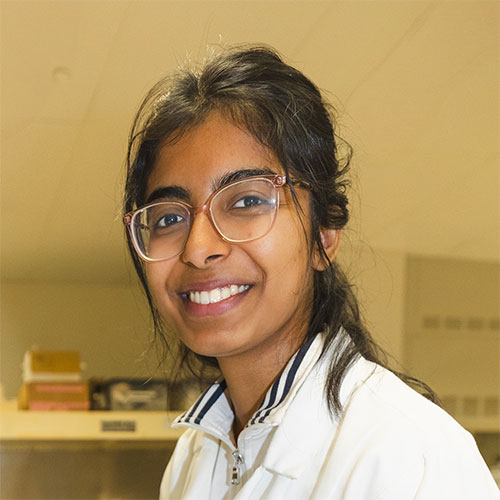
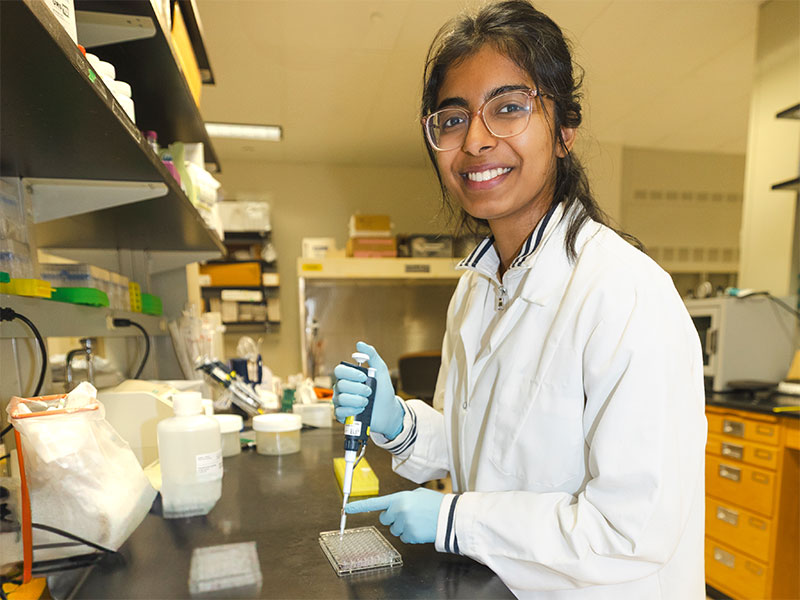
Shriya is a senior in the SEBS Biotechnology program, general option. As a New Brunswick Honors College student, she started her undergraduate research on corals in the Bhattacharya Lab in her junior year through the Aresty Research Assistant program. She continued her work with paid summer internships, and by pursuing her G.H. Cook Honors Thesis.
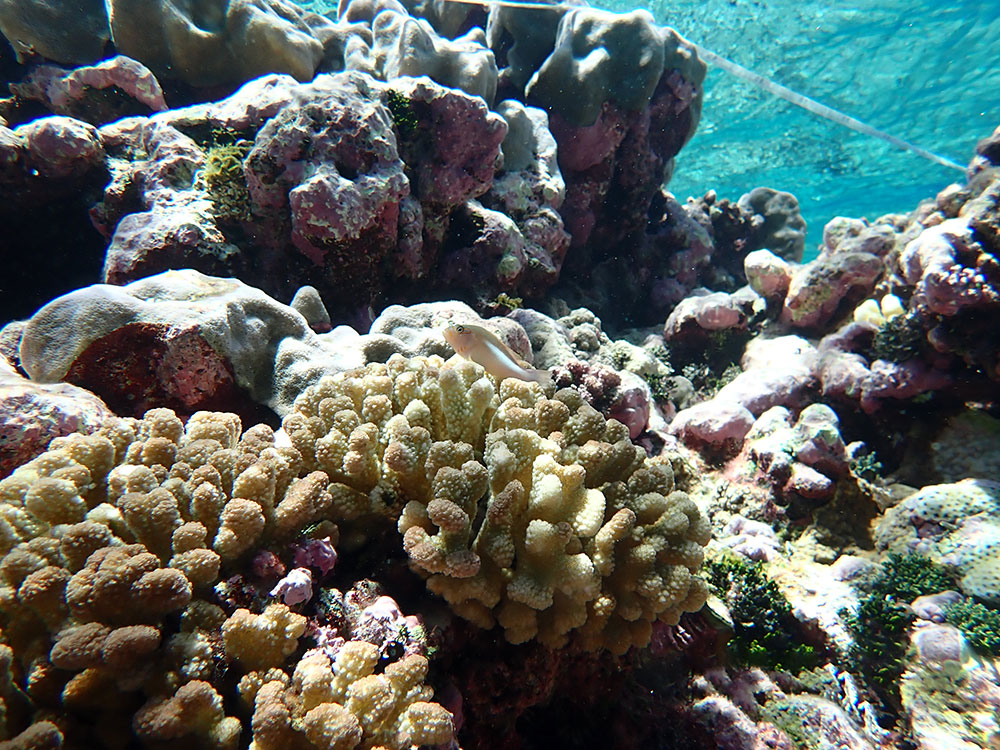
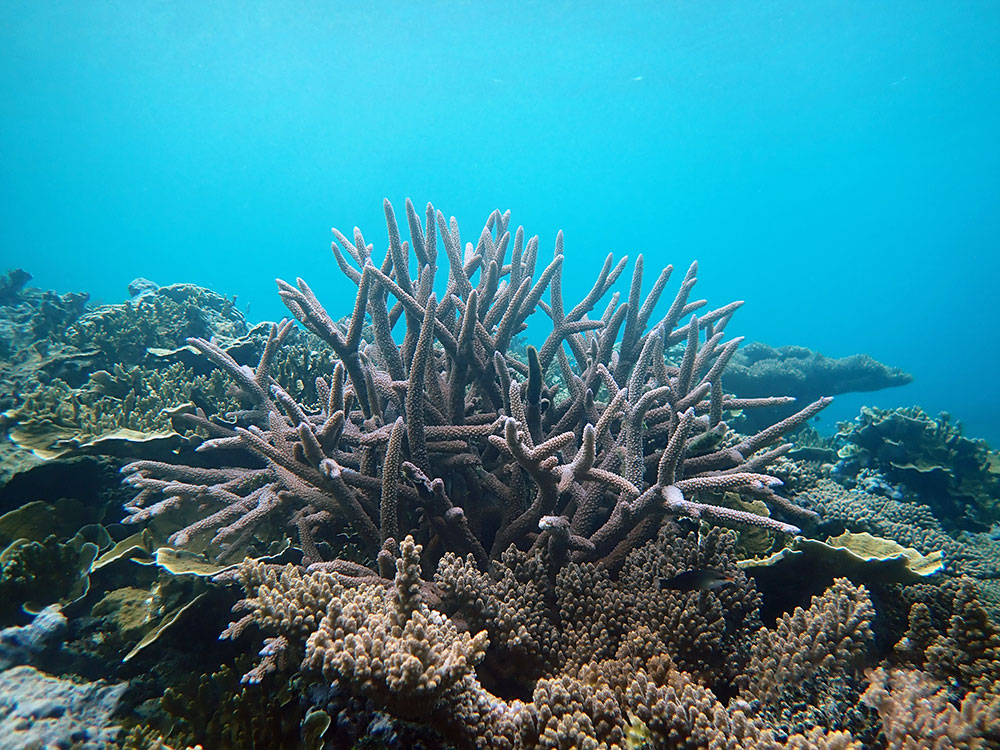
Shriya’s research in the Coral Hospital initiative is to test and validate whether health test kits that are developed for humans can be used on marine species, using corals as the initial test case. Corals suffer from warming oceans that can result in “bleaching” (loss of algal symbionts) and are also prone to devastating diseases such as Stony Coral Tissue Loss Disease (SCTLD) that has eliminated coral reefs in Florida and spread throughout the Caribbean region.
The research Shriya presented to the program described the testing of specific chemicals in coral tissues that act as markers of reef health. She has adapted the popular Urinalysis test kit developed to diagnose human health to corals. This approach offers a rapid and inexpensive way to assess how corals are faring in the field. The coral results are being validated using quantitative metabolomics with collaborators at the core center of the Rutgers Cancer Institute.
Shriya’s mentor, Ecology and Evolution graduate program student Erin Chille, suggested to her to apply for the D.O.O.R.S. program. It is a nationwide Mentorship and Scholarship Program, which aims to recognize and empower 10 undergraduate students each year in life science who represent underrepresented groups. It is funded by Promega and the BioPharmaceutical Technology Center Institute (BTC Institute). The scholarship supported Shriya’s tuition and advanced her research skills via the Biotechnology major. The award also includes a Mentorship Program with a professional from the biotech industry, and participation in D.O.O.R.S. Scholar’s Day 2025, an in-person event held at the BTCI / Promega campus in Madison, WI.